The V1 & V2 Display
Hitler’s ‘revenge weapons’
In the summer of 1944, a new terror came over the Kent coast. This display tells the story of Hitler’s Vergeltungswaffen, his ‘revenge weapons’, and the people who faced them.
The Doodlebug
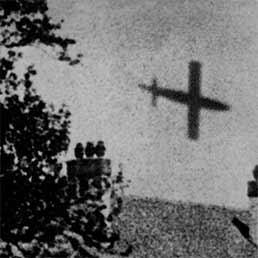
At the centre of the display is a Fieseler Fi 103 V1 flying bomb, part original and part replica, built for the 1965 film Operation Crossbow. The V1’s pulsejet engine made a harsh, rasping drone, which earned it the nicknames ‘buzz bomb’ and ‘doodlebug’.
The world’s first operational cruise missile, the V1 carried 1,870 lb (848 kg) of explosive at around 400 mph (640 km/h). A small propeller on its nose counted the distance flown. When it reached the number of revolutions set by the ground crew before launch, explosive charges would set it into a steep dive and cut the fuel lines. For people on the ground, that sudden silence meant the bomb was about to fall.
The first V1 fell at Swanscombe, Kent, on 13 June 1944. Some 10,000 were launched against Britain, but roughly 4,000 were shot down by fighters, anti-aircraft guns and barrage balloons, many of them over the sea. The map on display shows where many of them were brought down. Many others crashed or went off course soon after launch. Around 2,400 reached London and some 1,400 fell in Kent, known as ‘Doodlebug Alley’. The last fell at Datchworth, Hertfordshire, on 29 March 1945.
Also on display
- A section of an original launch ramp, with a launch piston and compressed air bottles.
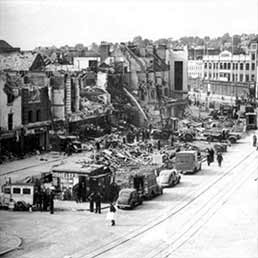
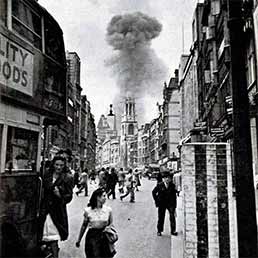
- Photographs and items from V1s and V2s that fell on south-east England in 1944–45.
- A model Hawker Tempest, the fast RAF fighter that hunted the V1s down.
The ‘B’ Flight Dispersal Hut
The display is housed in the original 1940 ‘B’ Flight Dispersal Hut, used by the squadrons flying from Hawkinge. It first stood on the east side of the airfield by Killing Wood, and the Museum moved it to its present site in the mid-1980s, before developers began building on the airfield in 1993.
From 15 November 1940 the hut was home to No. 421 Flight. Its pilots flew high over the coast and the Channel on ‘Jim Crow’ patrols, spotting enemy aircraft and reporting their types, numbers and tactics. In January 1941 the Flight was renumbered No. 91 (Nigeria) Squadron, later known for fighter sweeps over France, night operations, air-sea rescue searches and attacks on Channel shipping.
